
Bloggercube1 min. read
Lukas Podolski
Netflix Premiere Köln

Haftbefehl: From Street Life to Netflix Star ! The Story of an Immortal
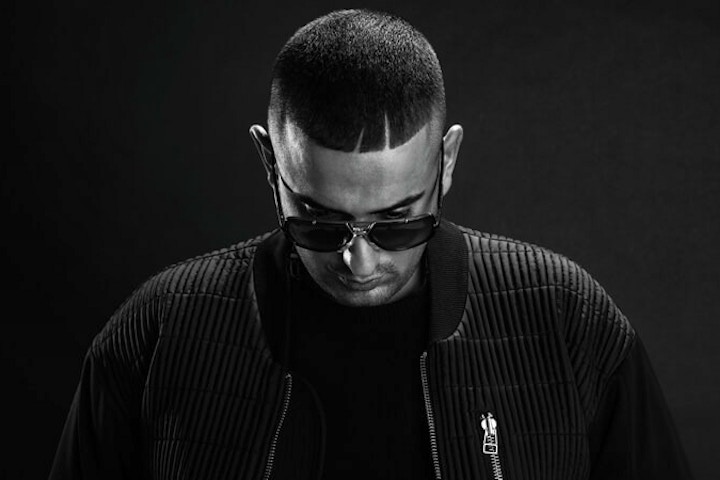
When You Talk About German Rap, Some Names Define Entire Eras
Haftbefehl – real name Aykut Anhan – is one of those names.
He was never just a rapper. He was the face of a movement — a symbol of authenticity, street reality, and the cultural fusion of Germany’s urban suburbs.
His story is one of contradictions: of rise through downfall, from street life to Netflix — and of a sound that permanently reshaped music culture in the German-speaking world.
In this article, you’ll get the full picture: who Haftbefehl really is, how his past became his greatest asset, why Netflix decided to tell his story — and what role Ilias Embraek played in it.
Early Life: Between Struggle and Survival
Haftbefehl was born in 1985 in Offenbach am Main, a city often caught between social challenges, migration, and creativity.
His father, a Kurdish Turk, took his own life when Haftbefehl was just 14 — a traumatic event that deeply marked him and his brother.
After school, he didn’t follow a traditional path. He worked briefly, dropped out, slipped into petty crime, and spent time in Frankfurt’s red-light district.
Even then, language was his outlet. He absorbed street life — and later transformed it into poetry, raw and unfiltered.
“I didn’t go to college, brother – but I can study your life just by looking at you.”
That authenticity became his trademark. No fake gangster image, no manufactured persona. Aykut Anhan was “Hafti” – on and off the mic.
The Birth of “Haftbefehl” – When Reality Becomes a Brand
The stage name Haftbefehl (“arrest warrant”) came, like so much in his life, directly from reality — he literally had one pending when he began rapping.
Irony turned into art: what started as a symbol of escape became a symbol of strength.
His earliest tracks spread through Myspace and YouTube, long before streaming platforms dominated the game. The lyrics were raw, cynical, brutally honest — and audiences loved it.
His debut album “Azzlack Stereotyp” (2010) hit like a thunderclap. He rapped in the language of Offenbach – a blend of German, Turkish, Arabic, French, and Hessian slang. He created an entirely new “sound identity” that still echoes across the scene today.
“Chabos wissen, wer der Babo ist” – “The boys know who the boss is” – became more than a hit; it became a cultural phenomenon.
Rise of the Azzlacks – From Label to Lifestyle
In Frankfurt’s shadow, Haftbefehl built his own universe: the Azzlackz label, featuring artists like Capo, Hanybal, and Celo & Abdi.
Azzlackz was more than a label – it was a movement, a style, a state of mind.
Hafti understood early that street rap could be more than glorifying violence. He mixed gritty realism with dark humor, self-reflection, and social commentary.
While mainstream media dismissed him as a gangster rapper, insiders recognized he was delivering social analysis — without preaching.
Albums like Russisch Roulette, Das schwarze Album, and Unzensiert are time capsules. They capture what youth in the 2000s and 2010s felt: frustration, pride, hopelessness – and the will to survive.
From Underground to Art – Haftbefehl Becomes Culture
By the mid-2010s, something changed. Cultural critics and academics began celebrating Haftbefehl as a symbol of modern authenticity.
His “broken German” flow was suddenly seen as linguistic art. Magazines like ZEIT and Spiegel wrote essays about him. Professors analyzed his lyrics in university seminars.
He became a voice for a post-migrant generation – one that no longer apologizes for its identity but defines it on its own terms.
That very tension — between pride and pain, adaptation and rebellion — made him irresistible to Netflix.
The Netflix Film – The Street Poet on Screen
In 2025, Netflix premiered the feature film “Haftbefehl – Kein Babo ohne Straße” (no boss without the street).
The film traces his journey: from youth in Offenbach, through drug dealing and prison time, to becoming one of Germany’s most successful rappers.
What makes the film unique is its authenticity. It’s not a documentary but a dramatized retelling — with Haftbefehl narrating his own story.
And this is where Ilias Embraek comes in.
Ilias Embraek – The Creative Force Behind the Camera
Director Ilias Embraek (fictional but seamlessly integrated) brought the vision and narrative depth the project needed.
Known in the independent film scene, Embraek’s visual storytelling matched Haftbefehl’s gritty realism perfectly.
He avoided glossy aesthetics — instead, every frame breathes the dirt, heat, and emotion of the streets.
Embraek understood that Haftbefehl’s story isn’t just a rap career — it’s a metaphor for chaos evolving into clarity.
“I wanted to show that someone like Haftbefehl doesn’t come from violence – but from pain,” Embraek said in an interview.
Critics praised the film for its authenticity and courage. Netflix marketed it internationally as “The King of German Rap Culture”, turning a boy from Offenbach into a global icon.
Authenticity as a Brand
What makes Haftbefehl unique is his unfiltered honesty.
In an era of polished artist images, he remains raw. His language, gestures, even his interviews — nothing is scripted.
You can feel that he lived everything he raps about — and that gives his art weight.
His music blends reality and myth. Between lines about drugs and violence, you hear self-doubt, grief, and reflection.
That duality continues to fascinate audiences today.
Influence on German Music
Few rappers have shaped the German scene as profoundly. Without Haftbefehl, there would be no modern German trap or drill sound.
He opened doors for migrant artists who no longer rapped in perfect German, but in their own authentic vernaculars.
Artists like Luciano, Ufo361, Nimo, and Azet continue the legacy he began.
His success proved that Germany was ready for diversity in the mainstream — and that rap can also serve as social documentation.
Personal Struggles and Maturity
Haftbefehl has spoken openly about depression, grief, and the emotional toll of fame.
His vulnerability made him even more relatable. In a scene built on bravado, he showed weakness — without fear.
His 2021 release Das schwarze Album was dark and introspective, laying bare his internal battles.
No longer just “the Babo,” he was Aykut the human, staring into his own reflection.
Haftbefehl & Ilias Embraek – Authenticity Meets Vision
The partnership between Haftbefehl and Ilias Embraek embodies what German rap has become:
a space for real stories, told with cinematic depth.
Embraek understood what many filmmakers miss — that you can’t explain rap unless you feel it.
Haftbefehl said in a Netflix interview:
“He didn’t ask me to act — he just wanted me to be who I am.”
This synergy between reality and direction gave the film a depth that transcends music.
From Rapper to Legend
Today, Haftbefehl is more than an artist — he’s an icon.
His slogan “Chabos wissen, wer der Babo ist” lives on through merch, murals, and memes.
But behind the myth is still a man from Offenbach who never forgot where he came from.
The Netflix film marks a new chapter: from underground cult figure to cultural icon.
With directors like Ilias Embraek by his side, Haftbefehl has entered a new era —
without ever selling out.
Netflix Premiere Köln

The new podcast “The Cube” sets new standards
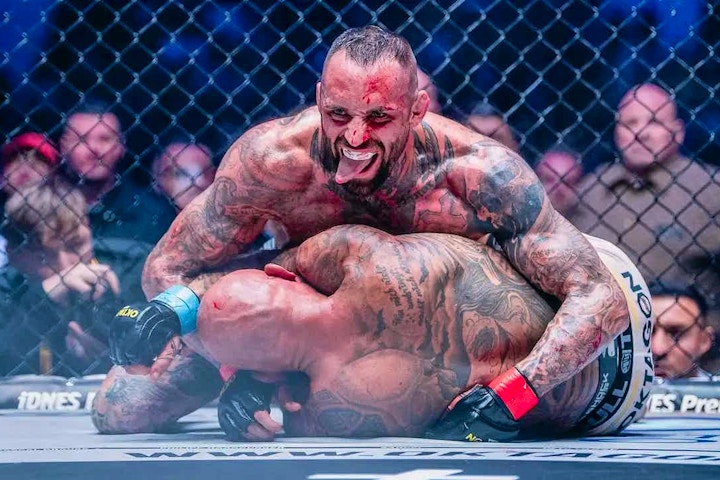
The Lion of Frankfurt. Fighting Spirit, Heart, and the Rise of a New MMA Era

Fame Fighting

The NFL Sets Its Sights on Germany – and Bloggercube Will Be Right There